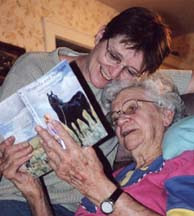
As I prepared to publish a different post, today, I noticed the last one I posted, Tell me, please. Most people are honest, aren't they? and am compelled to reveal the outcome of the search for the lost (stolen?) books before I go on. I publish this explanation with joy—that my faith in humanity is restored, and chagrin—at having to admit that I, and I alone, am the guilty party.
The explanation may relate to my next post: Confessing and Accepting my Chaotic Mind, but, long story short, after giving up on ever finding them again, and seeking to replace the lost items, I found them, just in time to stop the order for replacements. Where did I find them? The answer, as is the case almost every time I lose anything, is—exactly where I put them. (The box of discs for the audio books in a basket of props covered with two tablecloths and the books I purchased for birthday gifts, on a cluttered shelf in my office underneath an old magazine.)
My apologies to the world for thinking the worst when I should have known the truth from my life-long experience with a forgetful and dissociative mind.
Monday, September 28, 2015


Sunday, August 23, 2015
Tell me, please. Most people are honest, aren't they?
Because I find it so hard to believe that anyone, especially in the small and lovely town of Ennis, Montana, would deliberately steal an item out of the back of a car, it has taken me this long to admit that someone did. The compact disks for eighteen audio books for the late Joan Bochmann's novel Absaroka, mentioned in my previous post, were indeed lifted from the trunk of my car as we were loading up from the authors' sale at the Madison Valley Arts Festival on August 8.

After searching thoroughly, asking others and at the bank, (on whose lawn the event was held) and running a want ad in the lost and found section of the paper, I’ve finally accepted the only possible explanation, someone walked by, lifted the box (and a bag of a half dozen or so books that I’d purchased from other authors at the event) from the trunk of my car as they went by. Why? I’ll never know. I suppose the open maw was inviting and the only two things in the car small enough to take in a hurry were carried off. I just couldn't think why anyone would want a box of 72 CDs (eighteen audio books without cases or covers) and so was very reluctant to believe it, although there was no other explanation.
 When I finally realized that the books
I bought for gifts were missing, too, I had to admit that someone intentionally stole
them. Perhaps, on seeing what was in the box, the disappointed thieves dropped it in a trash receptacle somewhere. For if it had been found, it would have come back to me, as the shipping label was still on it. And most people are honest, right?
When I finally realized that the books
I bought for gifts were missing, too, I had to admit that someone intentionally stole
them. Perhaps, on seeing what was in the box, the disappointed thieves dropped it in a trash receptacle somewhere. For if it had been found, it would have come back to me, as the shipping label was still on it. And most people are honest, right?
I'd like to believe that the thieves would sort through and find disks 1 through 4 of this book and listen to the velvet voice of Scott Tanner as he reads Joan's awesome story, and I hope they at least read the books they stole, but, it's hard for me to believe readers could also be thieves—the novel The Book Thief (one of my favorites) not withstanding. It’s disheartening to think of the kinds of people who would do this, but I’ve learned a lesson about trust.
Or have I? I've learned to lock my car when I have something of value inside. And next time, I might close the trunk between loads, though it would be considerably less convenient. But I still desperately want to believe that most people are honest and respectful of others' rights and property. Please tell me that this is true.

After searching thoroughly, asking others and at the bank, (on whose lawn the event was held) and running a want ad in the lost and found section of the paper, I’ve finally accepted the only possible explanation, someone walked by, lifted the box (and a bag of a half dozen or so books that I’d purchased from other authors at the event) from the trunk of my car as they went by. Why? I’ll never know. I suppose the open maw was inviting and the only two things in the car small enough to take in a hurry were carried off. I just couldn't think why anyone would want a box of 72 CDs (eighteen audio books without cases or covers) and so was very reluctant to believe it, although there was no other explanation.

I'd like to believe that the thieves would sort through and find disks 1 through 4 of this book and listen to the velvet voice of Scott Tanner as he reads Joan's awesome story, and I hope they at least read the books they stole, but, it's hard for me to believe readers could also be thieves—the novel The Book Thief (one of my favorites) not withstanding. It’s disheartening to think of the kinds of people who would do this, but I’ve learned a lesson about trust.
Or have I? I've learned to lock my car when I have something of value inside. And next time, I might close the trunk between loads, though it would be considerably less convenient. But I still desperately want to believe that most people are honest and respectful of others' rights and property. Please tell me that this is true.
Tuesday, August 11, 2015
The mystery of the disappearing audio CDs
When I sold the last audio book, four CDs of the magic voice of Scott Tanner reading Joan Bochmann's novel, Absaroka, I ordered more, hoping to have them here by my next book sale at the Madison Valley Arts Festival in downtown Ennis, Montana. They didn't get here on Friday, as I'd hoped, but there was still opportunity if they came the next day. From the festival venue on Saturday, I called my post office in a town 16 miles away. Yes they were there. Should I go get them, leaving my friend and fellow author to take care of both our tables of books? A tiny voice said, "no," but I immediately hushed it and said, "What the heck? It'll only take a few minutes." After all, I live in rural Montana, where we are accustomed to driving long distances to work, to medical appointments, to get groceries, mail packages, or to visit a "neighbor."
I got the package containing compact discs for 20 books, buzzed right back to our table, filled the two cases I'd brought with me, and had them on the table for display in less than an hour. Though rainy and cool, we had a fun and productive day. People were not discouraged by the weather and the park filled with visitors. We sold a lot of books—but no audio books.
At four o'clock we packed up to leave. After loading everything in the trunk of my car, my friend did a double check just to make sure we did not leave anything behind. All was well and good—until I started to put the rest of the CDs in the cases I had at home. I couldn't find the CDs. "Hmm, where did I put them?" I searched the house, the car, all around the car and the house dozens of times before admitting they are not here. They have to be, but they aren't. Via email, my friend verified that she had placed them in the trunk of my car and even told me just where they sat in relation to other boxes.
So, yes, they have to be here. But they are not. And what's baffling is that there is no explanation for why they are not. They couldn't have fallen out of a locked trunk. They were not left behind. We didn't stop anywhere else. I emptied every box we brought home and put everything away. That box of CDs is NOT here! I believed for a while that it would "turn up." I no longer have any such hope. They have disappeared. Vanished. Ceased to exist. There is no other explanation.
I will have to order and pay for more and in the meantime, as I'm prone to do, I keep running a different scenario through my mind. My rueful look backward as I desire to change what can't be changed. It's my realization of what I SHOULD have done. In this lovely scene, I listen to that tiny voice that always speaks the truth, and do NOT go to the post office and get the CDs. In this dream, I pick them up with my mail on Monday morning and they are now safely in my possession ready to tuck into the audio book covers. That's hindsight, where my vision is 20-20. Maybe next time I'll listen. But haven't I said that before?
I got the package containing compact discs for 20 books, buzzed right back to our table, filled the two cases I'd brought with me, and had them on the table for display in less than an hour. Though rainy and cool, we had a fun and productive day. People were not discouraged by the weather and the park filled with visitors. We sold a lot of books—but no audio books.
At four o'clock we packed up to leave. After loading everything in the trunk of my car, my friend did a double check just to make sure we did not leave anything behind. All was well and good—until I started to put the rest of the CDs in the cases I had at home. I couldn't find the CDs. "Hmm, where did I put them?" I searched the house, the car, all around the car and the house dozens of times before admitting they are not here. They have to be, but they aren't. Via email, my friend verified that she had placed them in the trunk of my car and even told me just where they sat in relation to other boxes.
So, yes, they have to be here. But they are not. And what's baffling is that there is no explanation for why they are not. They couldn't have fallen out of a locked trunk. They were not left behind. We didn't stop anywhere else. I emptied every box we brought home and put everything away. That box of CDs is NOT here! I believed for a while that it would "turn up." I no longer have any such hope. They have disappeared. Vanished. Ceased to exist. There is no other explanation.
I will have to order and pay for more and in the meantime, as I'm prone to do, I keep running a different scenario through my mind. My rueful look backward as I desire to change what can't be changed. It's my realization of what I SHOULD have done. In this lovely scene, I listen to that tiny voice that always speaks the truth, and do NOT go to the post office and get the CDs. In this dream, I pick them up with my mail on Monday morning and they are now safely in my possession ready to tuck into the audio book covers. That's hindsight, where my vision is 20-20. Maybe next time I'll listen. But haven't I said that before?
Sunday, July 5, 2015
Taking Stock and confessing my weaknesses, by Janet Muirhead Hill
-->
Dreaming is easy. It's what I do best. Ideas are never in short supply. Now
it's time to figure out how to implement the ideas in the time I have left in
this world. All I know for sure is that it is going to take a lot more than
just dreaming.
I've never been a very good planner. That I must admit. I'm an idealist wishing only to make the world a better place for everyone. Lofty? You bet. And overwhelming, too. So overwhelming as to be debilitating. The wheels spin and it’s like a heart going into fibrillation, and nothing gets done. Needing a defibrillator of the brain, I'm taking stock, prioritizing, and attempting, once again, to organize and vitalize a plan.
Raven Publishing, of which I'm CEO—and sole staffer, has some amazing authors who are also wonderful, genuine, and good people. Their talent is amazing, and my company is truly blessed to have had the opportunity to get their books into print. So first on my list is to get the published books circulated, distributed, better known, and widely sold—or to turn them over to someone who can do it better, namely the authors themselves.
Because we are shorthanded, here, (I only have two) I'm going to concentrate my limited marketing efforts on the works of the authors I already have, not taking on any new ones, (with the possible exception of a middle-grade novel whose manuscript, I already agreed to consider.) I will also consider new works of the authors whose books I've already published, if they choose to submit them. If they decide to seek another publisher, I'll support them in every way I can. And I will continue to publish books of my own, although I might submit them elsewhere first.
Raven must always stand for quality. We (I plus a volunteer acquisitions committee) choose content and writing that are topnotch. Quality construction and presentation are top priorities.
So, what is the future of Raven Publishing? That question is not answerable at this point. But my aim is to keep it as strong as I can for as long as it lasts and to have a good exit plan for when I am no longer able to keep it going—a plan in which the books already published will be left in the hands and under the control of the authors or the authors’ heirs and will hopefully remain available for the reading public. They are all good books, and each important in its own way.
Immediate plans include the introduction of our first picture book, a collaboration between myself and famed and talented artist Herb Leonhard. It will be published in 2016. It is my hope that Joan Bochmann, my departed sister’s book, Prism, will also come out either next year or the next. (It was begun before she died of cancer, and I finished it at her request.) Presently it is being reviewed by her children.
I plan to have a sequel to my latest book, The Horse and the Crow, written and published next year. It is called, Horses for Sale, A Miranda and Starlight Story (vol. 8) and I want to write and publish a spinoff, The Horse of the Rising Sun, Teddy Hungry Horse’s story, a continuation from his introduction in The Horse and the Crow. I’m aiming for 2017 on that one. Books by other authors will depend on them. I encourage them to find a publisher with a greater reach, but, for those who know both my skills and my limitations first hand and still want to have their books published by Raven, I will continue to honor them and publish their writing, for I know its quality.
Looking further into the future, I have several other books either written and needing editing, or begun and needing to be finished, that I hope to publish before I give it up. They are:
Lorvi — first book I ever wrote, a fantasy adventure something like The Lion, the Witch, and the Wardrobe, in that the protagonists travels back and forth between a real and a fantasy world, but darker.
Return to Lorvi — sequel to Lorvi and my second book to write.
Fault Lines — an adult novel about a large, well-to-do family who suddenly find themselves homeless. (written and awaiting rewrites)
Fugitives from Planet Eden — my attempt at science fiction (written and ready for a serious rewrite and then a sequel. Either that, or I need to write more and make it just one book.
A Play (unnamed as yet) It could become a novel instead. It isn’t finished but has a delightful start, and is authored jointly by my granddaughter and me. I’d love to see it finished.
Then there are a couple more beginnings that my sister wrote, that I’d like to see finished. One, a mystery/legal thriller called By Reason of Insanity would make a terrific novel if someone (maybe me with help?) could finish it. The beginning is instantly gripping. The other is Uncommon Thread and could be turned into a short story. It may be my next short story attempt.
The Wind is a short story that I wrote and recently submitted to a contest. When the contest is done, I will seek to publish it elsewhere or publish it myself.
More to the Miranda and Starlight series after book 8? We’ll see. More for Teddy Hungry Horse’s story? Maybe. Let’s see, I need to live to be about 120. That might be enough time, if I work consistently and don’t have any more ideas. Oh, but the picture book I’m publishing next year will need some sequels. It’s called Billings and Jingles: The First Big Adventure.
I've never been a very good planner. That I must admit. I'm an idealist wishing only to make the world a better place for everyone. Lofty? You bet. And overwhelming, too. So overwhelming as to be debilitating. The wheels spin and it’s like a heart going into fibrillation, and nothing gets done. Needing a defibrillator of the brain, I'm taking stock, prioritizing, and attempting, once again, to organize and vitalize a plan.
Raven Publishing, of which I'm CEO—and sole staffer, has some amazing authors who are also wonderful, genuine, and good people. Their talent is amazing, and my company is truly blessed to have had the opportunity to get their books into print. So first on my list is to get the published books circulated, distributed, better known, and widely sold—or to turn them over to someone who can do it better, namely the authors themselves.
Because we are shorthanded, here, (I only have two) I'm going to concentrate my limited marketing efforts on the works of the authors I already have, not taking on any new ones, (with the possible exception of a middle-grade novel whose manuscript, I already agreed to consider.) I will also consider new works of the authors whose books I've already published, if they choose to submit them. If they decide to seek another publisher, I'll support them in every way I can. And I will continue to publish books of my own, although I might submit them elsewhere first.
Raven must always stand for quality. We (I plus a volunteer acquisitions committee) choose content and writing that are topnotch. Quality construction and presentation are top priorities.
So, what is the future of Raven Publishing? That question is not answerable at this point. But my aim is to keep it as strong as I can for as long as it lasts and to have a good exit plan for when I am no longer able to keep it going—a plan in which the books already published will be left in the hands and under the control of the authors or the authors’ heirs and will hopefully remain available for the reading public. They are all good books, and each important in its own way.
Immediate plans include the introduction of our first picture book, a collaboration between myself and famed and talented artist Herb Leonhard. It will be published in 2016. It is my hope that Joan Bochmann, my departed sister’s book, Prism, will also come out either next year or the next. (It was begun before she died of cancer, and I finished it at her request.) Presently it is being reviewed by her children.
I plan to have a sequel to my latest book, The Horse and the Crow, written and published next year. It is called, Horses for Sale, A Miranda and Starlight Story (vol. 8) and I want to write and publish a spinoff, The Horse of the Rising Sun, Teddy Hungry Horse’s story, a continuation from his introduction in The Horse and the Crow. I’m aiming for 2017 on that one. Books by other authors will depend on them. I encourage them to find a publisher with a greater reach, but, for those who know both my skills and my limitations first hand and still want to have their books published by Raven, I will continue to honor them and publish their writing, for I know its quality.
Looking further into the future, I have several other books either written and needing editing, or begun and needing to be finished, that I hope to publish before I give it up. They are:
Lorvi — first book I ever wrote, a fantasy adventure something like The Lion, the Witch, and the Wardrobe, in that the protagonists travels back and forth between a real and a fantasy world, but darker.
Return to Lorvi — sequel to Lorvi and my second book to write.
Fault Lines — an adult novel about a large, well-to-do family who suddenly find themselves homeless. (written and awaiting rewrites)
Fugitives from Planet Eden — my attempt at science fiction (written and ready for a serious rewrite and then a sequel. Either that, or I need to write more and make it just one book.
A Play (unnamed as yet) It could become a novel instead. It isn’t finished but has a delightful start, and is authored jointly by my granddaughter and me. I’d love to see it finished.
Then there are a couple more beginnings that my sister wrote, that I’d like to see finished. One, a mystery/legal thriller called By Reason of Insanity would make a terrific novel if someone (maybe me with help?) could finish it. The beginning is instantly gripping. The other is Uncommon Thread and could be turned into a short story. It may be my next short story attempt.
The Wind is a short story that I wrote and recently submitted to a contest. When the contest is done, I will seek to publish it elsewhere or publish it myself.
More to the Miranda and Starlight series after book 8? We’ll see. More for Teddy Hungry Horse’s story? Maybe. Let’s see, I need to live to be about 120. That might be enough time, if I work consistently and don’t have any more ideas. Oh, but the picture book I’m publishing next year will need some sequels. It’s called Billings and Jingles: The First Big Adventure.
Saturday, November 15, 2014
Gunshot Wound, a true story as told to Janet Muirhead Hill
I heard this story many times from both my mother and my grandmother.

The winter day was bitter cold. Grandpa, Clarence Claud Elkins, was at the homestead near Milner with all of his school age children except Hazel. She was in Steamboat Springs being doctored for a broken leg. Grandma, Maude Elkins, was with her. The preschoolers, Marvin and Martha were there as well, while
she tended to her eldest daughter at her brother, Claude Luekens's home.
A few minutes out in the subzero wind to hitch the horses to the sleigh was enough to convince Grandpa that it was too cold for the little ones to venture out. But it was his turn to drive the neighborhood children to school. So he left Gene (who was 8 or 9) and 6-year-old Dorothy in the warm house while he took Carrol (age 10 or 11) and the neighbors who wanted to go to school. He gave the little ones strict order to stay indoors and out of trouble. He put Gene in charge of keeping Dorothy safe.
Gene felt quite grownup with the responsibility he'd been given. When Dorothy expressed fear (probably of lions and bears) Gene reassured her by getting the gun from his parents' bedroom. "I'll take care of you," he said. The creaking of the house in the wind produced more fear, and Gene told Dorothy it must be a mountain lion trying to get into the attic where it was warmer. She was terrified. There was a hole in the ceiling around the stove pipe, and it was through there that Gene said he would shoot the offending lion.
As he was climbing up to get a shot, the gun accidentally discharged, hitting Gene's knee. He fell to the floor in great pain, bleeding profusely. He told Dorothy to run to the neighbor across the field for help. She didn't want to leave the house, but was convinced that her brother would die if she didn't. She ran out without coat or hat.
Luckily for her, the neighbor was looking out her kitchen window and saw Dorothy coming. She sent her son to run and meet her with coat, hat, and mittens. Dorothy gasped out her story as best she could. The neighbor lady sent her son on horseback to go meet C.C. while she went to see about Gene, taking Dorothy with her. When Grandpa, on his way back from delivering children to school, heard the awful news, he ran the team the rest of the way home. The neighbor had staunched the bleeding and wrapped the wound. Grandpa wrapped Gene and Dorothy in warm coats and blankets, nestled them in the hay on the sleigh, and drove them to Steamboat.
There, in Uncle Claude's house, Gene was put in a bedroom to be treated by the same doctor who had set Hazel's leg and put her in traction. Uncle Claude, after getting them settled, said, "Don't tell Maude," thinking another trauma to her children would be more than she could take. She entered the room saying "Don't tell Maude what?" And someone blurted out, "Oh, Gene shot himself, but don't worry." And thus she received the news that they feared would be too much for her. However, they had underestimated Grandma's strength and courage which she exhibited over and over again during her life.
The doctor dressed Gene's wound and told him to stay in bed and not move his leg. The doctor said Gene would always have a limp. When the doctor came to check on him days later, he was sitting on the side of the bed, swinging his leg back and forth. "What are you doing?" the doctor exclaimed in alarm.
"I'm working my knee," Gene told him. "I'm going to play football someday, so I've got to keep it from getting stiff." The doctor didn't argue, and indeed, Gene did not have a limp and he played football all through high school.
That is my Uncle Gene in the middle, and it's me he is holding. Left to right:
Sonja Elkins, Gayle Elkins, Gary Elkins, Gene Elkins, Janet Muirhead, Evan Elkins, Duane Muirhead, Joan Muirhead.
The winter day was bitter cold. Grandpa, Clarence Claud Elkins, was at the homestead near Milner with all of his school age children except Hazel. She was in Steamboat Springs being doctored for a broken leg. Grandma, Maude Elkins, was with her. The preschoolers, Marvin and Martha were there as well, while
she tended to her eldest daughter at her brother, Claude Luekens's home.
A few minutes out in the subzero wind to hitch the horses to the sleigh was enough to convince Grandpa that it was too cold for the little ones to venture out. But it was his turn to drive the neighborhood children to school. So he left Gene (who was 8 or 9) and 6-year-old Dorothy in the warm house while he took Carrol (age 10 or 11) and the neighbors who wanted to go to school. He gave the little ones strict order to stay indoors and out of trouble. He put Gene in charge of keeping Dorothy safe.
Gene felt quite grownup with the responsibility he'd been given. When Dorothy expressed fear (probably of lions and bears) Gene reassured her by getting the gun from his parents' bedroom. "I'll take care of you," he said. The creaking of the house in the wind produced more fear, and Gene told Dorothy it must be a mountain lion trying to get into the attic where it was warmer. She was terrified. There was a hole in the ceiling around the stove pipe, and it was through there that Gene said he would shoot the offending lion.
As he was climbing up to get a shot, the gun accidentally discharged, hitting Gene's knee. He fell to the floor in great pain, bleeding profusely. He told Dorothy to run to the neighbor across the field for help. She didn't want to leave the house, but was convinced that her brother would die if she didn't. She ran out without coat or hat.
Luckily for her, the neighbor was looking out her kitchen window and saw Dorothy coming. She sent her son to run and meet her with coat, hat, and mittens. Dorothy gasped out her story as best she could. The neighbor lady sent her son on horseback to go meet C.C. while she went to see about Gene, taking Dorothy with her. When Grandpa, on his way back from delivering children to school, heard the awful news, he ran the team the rest of the way home. The neighbor had staunched the bleeding and wrapped the wound. Grandpa wrapped Gene and Dorothy in warm coats and blankets, nestled them in the hay on the sleigh, and drove them to Steamboat.
There, in Uncle Claude's house, Gene was put in a bedroom to be treated by the same doctor who had set Hazel's leg and put her in traction. Uncle Claude, after getting them settled, said, "Don't tell Maude," thinking another trauma to her children would be more than she could take. She entered the room saying "Don't tell Maude what?" And someone blurted out, "Oh, Gene shot himself, but don't worry." And thus she received the news that they feared would be too much for her. However, they had underestimated Grandma's strength and courage which she exhibited over and over again during her life.
The doctor dressed Gene's wound and told him to stay in bed and not move his leg. The doctor said Gene would always have a limp. When the doctor came to check on him days later, he was sitting on the side of the bed, swinging his leg back and forth. "What are you doing?" the doctor exclaimed in alarm.
"I'm working my knee," Gene told him. "I'm going to play football someday, so I've got to keep it from getting stiff." The doctor didn't argue, and indeed, Gene did not have a limp and he played football all through high school.
Friday, November 14, 2014
Yampa Crossing: an Elkins family story.
Dorothy Dale (Elkins) Muirhead was born on this day 100 years ago, November 14, 1914. She was the fourth child of C. C. Elkins and Maude (Luekens) Elkins. This picture was taken not long after her father died in a military hospital in Hot Springs, SD. He was never in very good health after fighting in the Spanish-American war, where, according to family legend, he was shot with a poison arrow.
In honor of my mother and grandmother, who raised her family of six mostly on her own in hard times, I am going to retell some of the stories that they passed on to me.

In honor of my mother and grandmother, who raised her family of six mostly on her own in hard times, I am going to retell some of the stories that they passed on to me.
The Elkins family: Back row—Hazel, Carrol, Gene
Front row—Marvin, Dorothy, Maude, Martha
First: Yampa Crossing: The first time my mother almost died, by Janet Muirhead Hill
(A much longer, more detailed account of this story was published twice in a weekly magazine, called Junior Guide.)
My mother, Dorothy was eight or nine months old when the family tried crossing the Yampa River to get to the new homestead near Milner, CO, where C. C., my grandfather, had just finished building a house. Maude, Gene, and baby Dorothy were riding on a horse-drawn wagon, loaded with household furniture and clothing and driven by Maude's father, my great-grandfather Luekens. He followed the other wagon driven by C. C.
The river was deep with spring run off. The horses stumbled into a hole just below the ford. They went under momentarily and the wagon capsized, dumping all its contents and passengers into the swift water. Grandpa Luekens found his footing and was able to grab Gene and pull him to safety. He saw his daughter, Maude, come up and stand, but the baby she clutched in her arms was still under water. (Maude had hit her head on a rock on the bottom of he river and was "addled" or so it was explained to me.)
Grandpa Luekens pulled baby Dorothy from her arms and got her above water in time to save her, but Maude thought it was the river that had taken her baby and dove back into the current, trying to save her. She couldn't swim. Her husband, my grandpa, saw it all from the far side of the river. He ran along the bank until he saw her come up for the third time, dove in and pulled her out. She wasn't breathing, but, laying her on her stomach, he pumped her back until the water was expelled from her lungs and she was able to draw a breath. Thankfully, they all survived to have many more adventures and some scary scrapes with death.
Next time: Gunshot wound.
Thursday, October 16, 2014
Authors and sensitivity to criticism
I've noticed that some, maybe many, authors suffer from Enissophobia, or fear of criticism. Every critical word about their writing, no matter how constructive or kindly given, feels to them as a knife in their side—a personal attack that cuts deeply—or as one author said, "like cutting off my thumb."
What is it about us writers that makes us so vulnerable that we suffer extreme anxiety when we allow another person to read our written work? It is akin the fear a mother might feel in handing over her newborn infant to a stranger. An author's words were created and nurtured with fervor, extreme care, and attention to details and birthed with great emotion and that borders on both joy and pain. No wonder it hurts when someone points out a fault in this labor of love and devotion.
Yet, an editor's job is to refine, shape, and polish another author's work. This involves cutting, correcting, and suggesting something different—without discouraging the authors and sending them into hiding. It's the author's job to consider every cut, correction, and suggestion; and to defend every word and construction, if he doesn't agree with the edits.
As both an editor and an author, I see and empathize with both. As a writer I have felt the same trepidation when I put my work—myself—out there for another person to see and critique. I immediately begin to second guess myself, suddenly certain that my work is no good, and everyone will hate it.
But the editor in me knows that the book must be tried in the fire of many editors and the dross burned away, not just once, but many times, by much critical appraisal.
Because I know how that feels to an author, I attempt to be especially sensitive and open to the authors' viewpoints as they defend their "babies."
This Enissophobia, or sensitivity to criticism, seemed to intensify for my dear sister, mentor, and talented author as she neared the end of her life. I'm sure I inadvertently hurt her feelings more than once with comments that I meant to be positive, but were heard as fault-finding. And that breaks my heart, for I wouldn't have purposely hurt her for the world.
Now, as I edit and rewrite a book that we have co-authored, my part coming after her death, I can only correct her words by painstakingly considering her purpose and desires. My single desire for this book is that every word of it would meet her approval.
Not only is that my wish for my sister, Joan's words, but for those of every author whose work I edit. The hard part is that Joan is no longer here to defend her work, so I must do it for her.
What is it about us writers that makes us so vulnerable that we suffer extreme anxiety when we allow another person to read our written work? It is akin the fear a mother might feel in handing over her newborn infant to a stranger. An author's words were created and nurtured with fervor, extreme care, and attention to details and birthed with great emotion and that borders on both joy and pain. No wonder it hurts when someone points out a fault in this labor of love and devotion.
Yet, an editor's job is to refine, shape, and polish another author's work. This involves cutting, correcting, and suggesting something different—without discouraging the authors and sending them into hiding. It's the author's job to consider every cut, correction, and suggestion; and to defend every word and construction, if he doesn't agree with the edits.
As both an editor and an author, I see and empathize with both. As a writer I have felt the same trepidation when I put my work—myself—out there for another person to see and critique. I immediately begin to second guess myself, suddenly certain that my work is no good, and everyone will hate it.
But the editor in me knows that the book must be tried in the fire of many editors and the dross burned away, not just once, but many times, by much critical appraisal.
Because I know how that feels to an author, I attempt to be especially sensitive and open to the authors' viewpoints as they defend their "babies."
This Enissophobia, or sensitivity to criticism, seemed to intensify for my dear sister, mentor, and talented author as she neared the end of her life. I'm sure I inadvertently hurt her feelings more than once with comments that I meant to be positive, but were heard as fault-finding. And that breaks my heart, for I wouldn't have purposely hurt her for the world.
Now, as I edit and rewrite a book that we have co-authored, my part coming after her death, I can only correct her words by painstakingly considering her purpose and desires. My single desire for this book is that every word of it would meet her approval.
Not only is that my wish for my sister, Joan's words, but for those of every author whose work I edit. The hard part is that Joan is no longer here to defend her work, so I must do it for her.
Monday, February 10, 2014
Flash Fiction
Looking for a fun writing exercise? Here's one that will challenge the best of writers. Flash Fiction. Getting a complete story into as few words as possible. Publishers
of flash fiction vary in their required word limits, but it can be anywhere
from fifty to a thousand words.
In
the January, 2007 issue of The
Writer, there is an article by
Harvey Stanbrough, Sharpen Your Skills with Flash Fiction.
He says, “Because of its brevity, flash fiction
forces writers to see how unnecessary some words are, and their other writing
always improves, too.”
Although short, flash
fiction must be a complete story with these elements:
a.
Setting: Will
most likely be shown or implied through action, dialogue, or characterization.
b.
Character:
Most flash fiction has only one or two, but may have three or four, with some
of them only implied. “In flash fiction more so than in any other genre, you
will often find implied characters.” —
Stanbrough
c.
Conflict: In
flash fiction this is the most important element.
d.
Resolution:
The natural and satisfactory outcome to the conflict.
e.
Implication:
Give the reader just enough to get what the story is about. In so few words,
you are forced to trust your readers to see what you’ve shown without having to
tell it.
“When you only imply an emotion or an occurrence
and let the reader infer it, he actually experiences it to some degree.” —
Stanbrough
Do you want to try it? See if you can write a complete story in 100 words or less, then add it in the comments.
Saturday, February 1, 2014
On Writing True Fiction
For years, ever since the first writing workshop I conducted, I've called the kind of writing I do "True Fiction."
What does that mean exactly? It's the kind of fiction in which the character—or the muse via the characters—dictates the course of the story, as opposed to fiction in which the plot is carefully outlined according to formulaic rules. It's literary fiction vs. genre fiction. It's seat-of-the pants writing, character driven rather than plot driven.
So why do I call it true. It's because I write to learn the truth—about a given issue, about life, and about myself and what I really believe, and about what is important.
Others have described this kind of writing in their own terms, and a host of writers employ it. The late Tony Hillerman once said in an interview that he does not outline his books. He tried it, but it never worked for him. His characters had their own ideas of how the story should go.
And that's how they are, in true fiction. Once you are in the heart and mind of your story's characters, they will tell you if you're not telling the truth about them—about what they would do, think, or feel. And that's what makes writing so much of an exciting adventure.
Ann Lamott said "You make up your characters, partly from experience, partly out of the thin air of the subconscious, and you need to feel committed to telling the exact truth about them, even though you are making them up."
And it works like magic, as long as you, as Ann Lamott says, "don't pretend you know more about your characters than they do, because you don't. Stay open to them."
It's what Jon Gardner was talking about when he said, "Art is as original and important as it is precisely because it does not start out with a clear knowledge of what it means to say. Out of the artist's imagination, as out of nature's inexhaustible well, pours one thing after another."
"The writer," Gardner says, "asks himself at every step, 'Would she really say that?' or 'Would he really throw the shoe?'"
Wallace Stegner declared, "It is fiction as truth that I am concered with."
Oakley Hall claims that "Truth, not fact, is the business of fiction."
And as I write my stories from the characters' perspectives, I agree. It is the best way I know to learn and convey the truth of what it is really like to face the serious and difficult issues that challenge the human spirit.
In my workshops on "Writing True Fiction" I will show you that you, too, can write fiction from a character's perspective.
Have ideas—will travel
author@janetmuirheadhill.com
What does that mean exactly? It's the kind of fiction in which the character—or the muse via the characters—dictates the course of the story, as opposed to fiction in which the plot is carefully outlined according to formulaic rules. It's literary fiction vs. genre fiction. It's seat-of-the pants writing, character driven rather than plot driven.
So why do I call it true. It's because I write to learn the truth—about a given issue, about life, and about myself and what I really believe, and about what is important.
Others have described this kind of writing in their own terms, and a host of writers employ it. The late Tony Hillerman once said in an interview that he does not outline his books. He tried it, but it never worked for him. His characters had their own ideas of how the story should go.
And that's how they are, in true fiction. Once you are in the heart and mind of your story's characters, they will tell you if you're not telling the truth about them—about what they would do, think, or feel. And that's what makes writing so much of an exciting adventure.
Ann Lamott said "You make up your characters, partly from experience, partly out of the thin air of the subconscious, and you need to feel committed to telling the exact truth about them, even though you are making them up."
And it works like magic, as long as you, as Ann Lamott says, "don't pretend you know more about your characters than they do, because you don't. Stay open to them."
It's what Jon Gardner was talking about when he said, "Art is as original and important as it is precisely because it does not start out with a clear knowledge of what it means to say. Out of the artist's imagination, as out of nature's inexhaustible well, pours one thing after another."
"The writer," Gardner says, "asks himself at every step, 'Would she really say that?' or 'Would he really throw the shoe?'"
Wallace Stegner declared, "It is fiction as truth that I am concered with."
Oakley Hall claims that "Truth, not fact, is the business of fiction."
And as I write my stories from the characters' perspectives, I agree. It is the best way I know to learn and convey the truth of what it is really like to face the serious and difficult issues that challenge the human spirit.
In my workshops on "Writing True Fiction" I will show you that you, too, can write fiction from a character's perspective.
Have ideas—will travel
author@janetmuirheadhill.com
Friday, November 29, 2013
How odd—wildlife attached to the underbelly of my car.
When I was parked along the street at my niece's house day before yesterday, someone asked me, "What are you dragging?" I didn't know what she was talking about until she pointed out what looked like a big piece of meat hanging from the back axle. And, as it turns out, that is what it was.
When I was driving through Wyoming in the wee hours Wednesday morning, I saw huge blood stains on the highway extending for about a quarter of a mile. What I didn't see until too late to swerve and miss it was the carcass of an elk. I'm pretty sure it was an elk judging from the color and size, though I couldn't see the head, just a brown heap. I turned enough that when I ran over it, it went under the right side of my minivan, just inside the tires. It whumped pretty loud as it hit the undercarriage but not enough to do any damage. I didn't even stop to look, as it was very dark and I didn't have a flashlight. The car drove just fine and I don't see any damage.
I drove my car to my sister's house, and using her garden hoe, lifted the substance from where it was draped over the back axle. When stretched out it was about a yard long and fanned out a foot or so wide—a piece of roughed up muscle and tendons and/or ligaments. My sister noticed splatters of blood on the hood of my car. "You sure you aren't the one who hit the elk first?" she teased. I wasn't, thank goodness. But it was a fresh kill, and probably by a big truck. If a car had hit it, the car would surely have been disabled and the occupants most likely injured, if not killed. Emergency vehicles would have been called, and the elk would have been removed from the middle of the lane.
That was the most interesting part of my mostly uneventful drive to Colorado, and one I'd pretty much forgotten until the evidence was found dragging under my car.
It reminded me, however, of a discovery the day before when I had my oil changed in Bozeman. The young man who did the work showed me what he'd found hanging near the oil pan. He thought at first that it was a rope or gasket of some kind. When he pulled on it, it broke off. He was amazed almost to the point of disbelief at what he saw, so he managed to get hold of the piece still hanging and fish out another length of it. "I tried to find the head, but couldn't," he told me.
It was a snake. A rattlesnake, I'm sure from the pattern on the skin. It was about as big around as my little finger and very dried out.
I cannot explain how it got there, or why it died there. I have found small rattlers near where I park my car a couple of times before. I usually just scoop them up with a shovel and carry them to a neighboring pasture a long way from the house and drop them into the soft grass so they can go about their lives.
When I was driving through Wyoming in the wee hours Wednesday morning, I saw huge blood stains on the highway extending for about a quarter of a mile. What I didn't see until too late to swerve and miss it was the carcass of an elk. I'm pretty sure it was an elk judging from the color and size, though I couldn't see the head, just a brown heap. I turned enough that when I ran over it, it went under the right side of my minivan, just inside the tires. It whumped pretty loud as it hit the undercarriage but not enough to do any damage. I didn't even stop to look, as it was very dark and I didn't have a flashlight. The car drove just fine and I don't see any damage.
I drove my car to my sister's house, and using her garden hoe, lifted the substance from where it was draped over the back axle. When stretched out it was about a yard long and fanned out a foot or so wide—a piece of roughed up muscle and tendons and/or ligaments. My sister noticed splatters of blood on the hood of my car. "You sure you aren't the one who hit the elk first?" she teased. I wasn't, thank goodness. But it was a fresh kill, and probably by a big truck. If a car had hit it, the car would surely have been disabled and the occupants most likely injured, if not killed. Emergency vehicles would have been called, and the elk would have been removed from the middle of the lane.
That was the most interesting part of my mostly uneventful drive to Colorado, and one I'd pretty much forgotten until the evidence was found dragging under my car.
It reminded me, however, of a discovery the day before when I had my oil changed in Bozeman. The young man who did the work showed me what he'd found hanging near the oil pan. He thought at first that it was a rope or gasket of some kind. When he pulled on it, it broke off. He was amazed almost to the point of disbelief at what he saw, so he managed to get hold of the piece still hanging and fish out another length of it. "I tried to find the head, but couldn't," he told me.
It was a snake. A rattlesnake, I'm sure from the pattern on the skin. It was about as big around as my little finger and very dried out.
I cannot explain how it got there, or why it died there. I have found small rattlers near where I park my car a couple of times before. I usually just scoop them up with a shovel and carry them to a neighboring pasture a long way from the house and drop them into the soft grass so they can go about their lives.
Sunday, August 18, 2013
Melancholy Day
"There is melancholy in the wind and sorrow in the grass" (Charles Kuralt).
Do you ever have days like that? Maybe everyone does at times, usually because of living in a time other than the present. Not always of course, but regretting the past or worrying about the future causes unnecessary pain.
For me, this evening, the problem seems to be a mixture of past, future, and present. I admit it, I'm a bit homesick. But there you go—that problem comes from not living fully in the here and now, and the anecdote is simple: be grateful for the present and make the most of it. Understanding that a large part of this afternoon's sorrow relates to some phone conversations in which the news wasn't grand, I also realize that I'm feeling "grandchild time" withdrawal pain. I agree with the man who said: I have often thought what a melancholy world this would be without children, and what an inhuman world without the aged. Samuel Taylor Coleridge
Having thus identified the source, I feel better already, so I'll heed Paul McCartney's words: But with writers, there's nothing wrong with melancholy. It's an important color in writing, and I'll write some more of my book.
In the first chapter, Miranda has feelings she cannot describe—melancholy feelings that she can't pin down. Here it is in the first two paragraphs of my first draft of book 7 of the Miranda and Starlight series.
-->
-->
Do you ever have days like that? Maybe everyone does at times, usually because of living in a time other than the present. Not always of course, but regretting the past or worrying about the future causes unnecessary pain.
For me, this evening, the problem seems to be a mixture of past, future, and present. I admit it, I'm a bit homesick. But there you go—that problem comes from not living fully in the here and now, and the anecdote is simple: be grateful for the present and make the most of it. Understanding that a large part of this afternoon's sorrow relates to some phone conversations in which the news wasn't grand, I also realize that I'm feeling "grandchild time" withdrawal pain. I agree with the man who said: I have often thought what a melancholy world this would be without children, and what an inhuman world without the aged. Samuel Taylor Coleridge
Having thus identified the source, I feel better already, so I'll heed Paul McCartney's words: But with writers, there's nothing wrong with melancholy. It's an important color in writing, and I'll write some more of my book.
In the first chapter, Miranda has feelings she cannot describe—melancholy feelings that she can't pin down. Here it is in the first two paragraphs of my first draft of book 7 of the Miranda and Starlight series.
-->
Miranda Stevens, age 14 going on 30, as her daddy liked to
say, had everything her heart could possibly desire. So why wasn’t she the
happiest girl on earth?
“I should be so excited about
this weekend I’d be bouncing out of my boots,” she said to the freckle-faced, green-eyed
girl in the mirror. “So what is this feeling of —I don’t know, dread? Fear?
Like the world’s coming to an end and I’m the only one who knows it? Only I
don’t know. It’s just this feeling like something’s wrong.”
And then later on, even though she thought she'd found the cause of her gloom (news of her best friend's misfortune) the feeling returns. Here is the last paragraph of chapter one.
It wasn’t long before they were
on the road, Chris driving the crew-cab truck, Higgins riding shotgun, and
Miranda hunched forward in the back seat. She frowned as she stared at the road
ahead. The feeling she’d had the morning before was back, full force—an
overwhelming sense of doom. Now where the heck was that coming from?
I'm going, now, to write more of Miranda's adventure, figure out what's wrong—and how bad things will get before they get better.
Tuesday, August 13, 2013
Middle Child
Who knew there was such a thing as Middle Child's Day. There is, and it's today (well, actually yesterday, August 12. I just heard about it today.) You can read about it here. I thought it funny because I'm a middle child. "The middlest," I like to say.) Only in my case, at least in retrospect, it doesn't seem like a bad thing. I wrote a poem to my siblings at Christmas time a year or so ago. I know it's not December, but I'm sharing this poem in honor of Middle Child's Day.
Here is the poem.
-->
Here is the poem.
-->
From the Middlest Child
Smack in the middle of a family of six
I’ve a vantage point like no other
Seven years younger that my big sis
And four than my older brother.
When I was just four, the twins came along
Two sweet baby girls in one day.
By seven my love for another was strong
For baby brother had just come to stay.
That was a family for our mom and dad
Six children in all was enough
Joan was fourteen and mature for her age
Duane was eleven and tough.
I, in the middle, was seven years old
Shirley and Sharon almost three
When Larry, blue-eyed with fine hair of gold
Came to fill out our family tree.
My revered sister Joan has been without end
Worshiped and loved with my all.
Duane was my playmate, leader, and friend
I answered to his beck and call.
Twin sisters, the babies we cuddled and fed
Became workmates and playmates for me.
Larry, so sweet in his little bed
I cherished, and he adored me.
Now that were grown and some would say, “old”
(and I guess that’s not far from the truth)
The love we’ve all shared and the trials untold
Bind us in memories of youth.
And so to my family in this Christmas season
I must tell you, with all of my heart
I love you so dearly and for each have a reason
That I wish I we could never more part.
Merry Christmas, Happy New year, as I end this rhyme,
To you, your children, and your grands.
And so may this season of life and of time,
Bring joy as in spirit we join hands.
Monday, May 20, 2013
THE HISTORY OF A BOOK by guest blogger, Joan Bochmann (Written in February 2012)
It was the best of times; it was the worst of times. This is probably the best known first line of any novel ever written. I
have pretty much forgotten the story Dickens was beginning with this
line, but the words seem to describe some of the roller coaster rides I
have been on since mid-December. January 2012 brought a virtual torrent
of good news, bad news, euphoria and dread. I don’t think I’ve had such a tangle of emotions in many years. Unfortunately, the first part of February hasn’t relieved the chaos all that much.
January, 2012 was the 6th anniversary of the publication of a book that was born in the late 70s. I completed my first novel in, I believe, 1975. After a few rejections, I
was fortunate enough to hook up with an editor from Penguin and to work
with her in polishing my precious novel for publication. (Best of
times.) Unfortunately when my
editor, who was by then a good friend, was hit by a car while crossing a
Chicago street, Penguin returned the manuscript with the news of my
friend’s death and their decision not to do any of her “projects.” (Worst of times.) I
put the manuscript on a shelf and got on with life. I longed to write
again, and found a few opportunities to do short stories and essays for
small publications. In 2001, my
sister formed a small publishing company and urged me to take another
look at the book which would become Absaroka. I pulled the typewritten (yes, I did say typewritten) manuscript from its resting place and began to read. I fell in love with the story again. I did a little more research and some editing, and my sister’s company (Raven Publishing) agreed to publish the book. (Best of times.) My efforts to sell the book were hampered by the diagnosis of Stage IV lung cancer. (Worst of times.) God saw fit to heal my illness. (Best of times)
I
have spent the last four years in praise and gratitude for God’s
miraculous healing. In February of this year, (2012) a PET scan revealed the
cancer has returned and metastasized to other parts of my body as well! Really? (Worst of Times.) While having it come back is disappointing, it doesn’t change the joy of those 4 years God gave me. Contrary
to my lifelong dream of a beach house on Malibu, a cabin in the
mountains and fans clamoring for autographs, I did not get rich. Still,
having a book published, going on a couple of book tours, giving book
talks, getting some good reviews and winning two awards filled me with
joy and gratitude (Best of Times).
Raven
made the book available for digital download on Amazon Kindle and on
Smashwords, but I yearned to have the story told well on a high quality
audio book.
I
wanted this very much so that the people who love stories, but don’t
like reading books. can hear it in a very well-done audio version. I remember when I used to commute how much I loved listening to books on tape. When
my Mom lost her sight, I thought of all the visually impaired people
who would get so much pleasure out of listening to a good book.
It
is odd that the new cancer diagnosis came at a time when I was in the
process of working with a producer/engineer and a talented reader to get
Absaroka made into an audio book. I think God is with me on this. A dear friend I had not seen for several years called me out of the blue. He had just read Absaroka and wanted to know if I was interested in making it an audio book. We began thinking about all the people who could benefit from a book they could listen to and we became more and more excited. Brett had the ability, resources, and talent to engineer and promote an audio book. Sky Dance Mountain had, in fact, already done a couple of small audio books.
I
was right in the middle of trying to do a marketing plan, promotion and
other such issues when my health really took a nosedive. Still we all
moved on. I realized that the book needed a good, strong male voice to do the voice over. Another little nod of approval from God became evident when Scott Tanner agreed to do the recording. Scott
is not only extremely talented, but had begun investigating the
possibility of getting into this business as a second career.
Several recording sessions ensued. We
missed a self-imposed deadline because we realized this book had the
potential of being really moving and entertaining piece. We decided
quality was more important than punctuality in this case. Now it’s here—the official release date of February 18th (2012). Ah, the joy. A book that was published six years ago has another life, another audience. I
know the story inside out; Scott had read it when it came out, but just
recently re-read it, and Brett had read it just a few weeks before.
Despite this intimate knowledge of the story, while listening
to it, all three of us were moved to tears at some touching scenes, and
held our breath in suspense as it looked like the protagonist might not
win.
{Joan Bochmann is still fighting the battle against cancer and the accompanying disorder, cachecia disease, otherwise known as wasting disease. She has outlived doctors' prediction, but the disease hasn't gone away. God willing, she hopes to live to finish one or both of two other novels she has begun. She remains grateful for each day of life in which to enjoy her son, daughter, grandsons, and great grandchildren. She volunteers one day a week in the business office at her church, is planting flowers and taking care of her house and yard. She has good days (the best of times) and bad days when the pain and nausea immobilize her (the worst of times). Her life and her book have been and continue to be a blessing to many. Joan may be contacted and/or her books purchased via Raven Publishing—info@ravenpublishing.net, www.ravenpublishing.net}
Saturday, March 9, 2013
It's okay—no, it's imperative—to write poorly.
When writing anything, fiction, essay, memoir, or reports, if you have to write perfectly, making no mistakes, if your "boss" which is usually a voice inside your head, insists that your work be perfect, you'll likely give up before you start. That's why the Writing True Fiction workshop begins with "Freedom to Write Badly".
Freedom to Write Badly
In order to write, we must first overcome the fear of writing poorly.
As Julia Cameron says in The Right to
Write, “Perfectionism is a primary writer’s block.”
Have you ever told
yourself, “I’m not a writer,” when your attempts fell short of your vision or
failed to measure up to the prose of your favorite authors? That, according to
Anne Lamott in her book, Bird by Bird, is because you never see the masters’ first drafts. She declares
that all good writers rewrite; that their first drafts are far from what you
finally see in print. William Zinnser, in On
Writing Well, gives an example of a fourth of fifth draft of a page from
his book. He shows his proofreading marks, which, as he says, make it look like
a first draft. In his book On Writing,
Stephen King gives an example of his raw writing, the kind he feels free to do
with the “door shut. It’s the story undressed, standing up in nothing but its
socks and under shorts.” After a lot of editing and rearranging, he has a
revised copy that is, “the story putting on its clothes, combing its hair,
maybe adding a small dash of cologne.” Then he’s “ready to open the door and
face the world.”
In order for you to be
free to write badly, free from worry about sentence structure, plotting, or
mechanics, begin free-form writing exercises with no concern for rules. Free your muse by removing expectations for doing it “right.” It’s
important that you first write from your heart and imagination without
analyzing and correcting as you go. Do not judge; just write.
Many of the exercises in
this workshop are based on “free-form” writing. That's where you write
whatever enters your mind, with no thought of structure, grammar, spelling or
coherence. This form of writing is meant to awaken your muse and connect you
with memories and ideas that are deep within your psyche. It is not meant to be
a grammatically correct, astute, or well ordered. Trust the process. It works.
Even if you feel you don’t have anything to write, by keeping the pen moving,
you will invite the muse as you quiet the critic.
“Go ahead and make big scrawls and mistakes.
Use up lots of paper. Perfectionism is a mean, frozen form of ideals, while
messes are the artist’s true friends. What people forgot to mention when we
were children…was that we need to make messes in order to find out who we are
and why we are here—and by extension, what we’re supposed to be writing.” — Lamott
Thursday, March 7, 2013
Writing True Fiction.
As I gear up to present workshops again on how to write "true fiction" I thought it would be a good thing to define what I mean by that. What is true fiction, anyway? I can explain by sharing the Introduction to my "Writing True Fiction Workshop." So, here is what it means to me, including quotes from great authors who inspired me.
“True Fiction,” is more than
just a fun oxymoron. While it is completely made up from the imagination,
thereby “fiction,” it tells the truth about life in a way that makes it
believable. Call it what you want: realistic fiction, true-life fiction, literary
fiction, or serious fiction, it has to be true enough that a reader can
personally relate to it, be able to say, “I know how that feels,
or what that looks like. I’ve been there.” It is character driven rather than
plot oriented and written with a passionate commitment to a moral purpose. As Barbara Kinsolver said, "A novel can educate…, but first, a novel has to
entertain.” If it doesn’t engage the reader, it fails.
“It is fiction as truth that I am concerned
with here, fiction that reflects
experience rather than escaping it; stimulates rather than
deadens.”
—Wallace Stegner, On Teaching and
Writing Fiction
“True art seeks to improve life,
rather than debase it.”
— John Gardner, On Moral Fiction
“Pursuit of the truth, not facts, is the business of fiction.” — Oakley
Hall
Guidelines for “True Fiction” as taught in my workshop are:
1) It is a lens on life. “If it deals in make-believe—as it must—it
creates a make-believe world in order to comment on the real one.” — Stegner
2) It is author-centered. “You need to put yourself at the center; you
and what you believe to be true and right.” — Anne Lamott, Bird by Bird
3) It is moral as John Gardner
defines moral fiction: “a force bringing people together, breaking down
barriers of prejudice and ignorance, and holding up ideals worth pursuing.” Truth
in fiction includes trustworthiness—a responsibility to be true to both the
reader and yourself as an author.
4) It is consistent.
* It must stay
true to the characters it creates. Readers feel betrayed when a character they
have grown to understand and care about says or does something uncharacteristic
without any explanation for the reversal.
* It must stay
true to the premises it sets up. Even if you are writing science fiction or
fantasy, you must stay within the laws of physics or nature that govern the
venue or character you create.
* It must be technically accurate. Know the area and customs of
the land and the people you are writing about. If a certain kind of machine or
rigging enters your story, be sure you know exactly how it’s made and what it
does. Readers are quick to catch a technical mistake.
Tuesday, January 22, 2013
The times, they are a changing.
-->

On the one-hundredth anniversary of my dad’s birth, I
thought of the time—the world—he lived in. It is so different from the one my
grandchildren and their families are growing up in as to seem like an alien planet out
of a science fiction novel.
When Dad was born in rural
Nebraska in 1913, his parents had no car, but traveled by foot, horseback, or
horse-drawn vehicles. They worked the land with horse-powered implements. Dad’s
mother washed their clothes on a washboard in a tub, probably same tub her family all bathed in. She carried water from a pump outside and heated it on a
wood- or coal-burning stove. No refrigerator, no television, no electric lights
in their house. She ironed their clothing, tablecloths, handkerchiefs, and
pillowcases with a flat iron, heated on the stove.
Dad, the eldest of five children
was expected to help
provide for the family. He did chores and fieldwork as soon as he could hold a
rake or a shovel or the reins of a team of draft horses. He quit school after
eight grades to work full time in the fields and sometimes hired out to other
farmers, giving all his earnings to his parents. He loved to work with horses
from the time he was very young. I was sad to learn that he had to leave behind
his first horse, one he’d trained to do tricks and follow him like a puppy,
when his family moved from Nebraska to Colorado. (But, I digress)
Dad’s first car was a Model T Ford,
which he bought in Denver when he was in his early twenties and married. He and
Mom were in their late twenties and early to mid thirties by the time they
acquired an electric range to replace the coal-burning cook stove, a refrigerator to
replace the old icebox, and a telephone. I well remember that first phone. I
could pick it up, wait for the operator, say "61, please," and
Grandma would pick up and say hello. I thought it amazing that I could hear her
quite clearly even though she was all the way in town six or seven miles away.
My four-year-old great
granddaughter, by contrast, thinks nothing of, not only talking to, but seeing
her grandmother in Finland on Skype video calls. And yes, she knows how far
away Finland is. She visited there with her mother last spring—a world traveler
at age 3.
When my parents got their first
television when they were middle-aged (not that other people didn’t have them
earlier) we were all duly impressed with the black and white moving pictures
coming into our living room. Now my children and grandchildren fight to keep up
with the next improvement in viewing—with ever wider, flatter, clearer, more colorful screens. How fast home movie viewing has gone from VHS
to DVD to Blue Ray to—what is the latest improvement? I can’t keep up. Yet, the
little ones in my family are completely comfortable with electronic tablets,
computers, smart phones, and interactive electronic games, and motion sensing devices
like the Wii and Kinect which they’ve operated with ease since toddlerhood,
and which are being outdated as we speak.
Books, treasured because of their scarcity in my childhood,
can now be acquired and read with the press of a button or two from a library
of billions of titles on a device you can easily carry in your purse or
pocket.
Yes, it’s a different world with each generation. Which is
best? And who’s to say? I’m glad for the chance to live in a generation with a
view of both worlds and the ever-changing world around us. If I were able to choose between
living in the one my father grew up in, with its hard work—and its closeness to
a virtually unpolluted nature, or the one that lies ahead for my
grandchildren’s families, with its smart cars that drive themselves, electronic
technology I can’t even begin to imagine—and its deteriorating climate, polluted
oceans, rivers, air, and land—I’d choose the one closer to nature—the one with a more intimate connection with the flora and fauna that we are fast destroying.
I mourn the loss of so much that is being
destroyed by the carelessness and greed of my generation. I’m very sorry, children.

Wednesday, December 19, 2012
My next novel—finally named
My next novel has been a long time coming. Having undergone many rewrites, it has been ready for a while, but has been difficult to name. I've finally settled on a title and it will be published early next year.
The three titles in contention have been "The Body in the Freezer" which sounds like a murder mystery. It's not, although there is a body in the freezer that plagues the dreams of our young hero. "Directions Not Included" suggests humor, which it's not, though I think it will elicit a few chuckles. Instead, I've chosen to name it "Call Me Captain" hinting at a wistful yearning for recognition and giving it a poignancy that I hope will affect readers in a positive way.
It's about Samuel Ellingsford Capulin III, age 13, the only son of a middle class family. He fears and disdains his authoritarian and often absent father, a pilot for a commercial airline. Captain, as he wants to be called, sees his mother as weak and doting, with no real life of her own. To hide his anger and feelings of rejection, he cops an attitude of indifference, arrogance, and sarcasm—not just at home, but at school with any peers or teachers who don't earn his respect. The story begins in the office of Mrs. Mahoney, the junior high school principal, where Captain is frequently sent for his disrespect and disruption of a class.
When he goes a bit too far, Captain is suspended from school and ordered to serve six weeks of community service in a homeless shelter. The patrons to his breakfast line become real people with stories of their own, rather than the generalized mass of low-life his father derides and shuns. One of the patrons is a girl named Danni who brings her 3-year-old sister to the shelter. She rebuffs Captain's attempts to start a conversation, something he isn't used to. Prettier, more popular girls at school have always vied for his attention. Danni's snubs challenge him, and he becomes intrigued by her secrecy and independence.
When she finally shares one of her deepest secrets with him, he wonders what he has gotten himself into—and why.
The three titles in contention have been "The Body in the Freezer" which sounds like a murder mystery. It's not, although there is a body in the freezer that plagues the dreams of our young hero. "Directions Not Included" suggests humor, which it's not, though I think it will elicit a few chuckles. Instead, I've chosen to name it "Call Me Captain" hinting at a wistful yearning for recognition and giving it a poignancy that I hope will affect readers in a positive way.
It's about Samuel Ellingsford Capulin III, age 13, the only son of a middle class family. He fears and disdains his authoritarian and often absent father, a pilot for a commercial airline. Captain, as he wants to be called, sees his mother as weak and doting, with no real life of her own. To hide his anger and feelings of rejection, he cops an attitude of indifference, arrogance, and sarcasm—not just at home, but at school with any peers or teachers who don't earn his respect. The story begins in the office of Mrs. Mahoney, the junior high school principal, where Captain is frequently sent for his disrespect and disruption of a class.
When he goes a bit too far, Captain is suspended from school and ordered to serve six weeks of community service in a homeless shelter. The patrons to his breakfast line become real people with stories of their own, rather than the generalized mass of low-life his father derides and shuns. One of the patrons is a girl named Danni who brings her 3-year-old sister to the shelter. She rebuffs Captain's attempts to start a conversation, something he isn't used to. Prettier, more popular girls at school have always vied for his attention. Danni's snubs challenge him, and he becomes intrigued by her secrecy and independence.
When she finally shares one of her deepest secrets with him, he wonders what he has gotten himself into—and why.
Saturday, December 15, 2012
Confused by the Massacre in Connecticut
How to be?
What to feel?
So hard to understand
When feelings roil and churn
Collide
Crash into each other
And then lay dead
A weight in the pit of my stomach.
The sadness and grief and confusion
Refuse to be reconciled.
With present joy and blessings
I can’t feel one
Without it being swept away
By the other.
Feelings of joy
And depths of gratitude
Flood my soul
When I watch
My grandsons play
Squealing with delight
Over little discoveries.
Feelings of sadness
Fear and guilt
Sweep away the joy
As I remember
Twenty little children
Who can no longer play
And parents and grandparents
Who will never
Watch their little ones
Make new discoveries
Or hear their shouts of joy
And laughter ever again.
Friday, October 12, 2012
Preserve writing time: a poem by Janet Muirhead Hill
Oh, the distractions a writer can find
When novel ideas don't spring to the mind.
Better to sit in the chair and think
Than to leave the room for another hot drink.
Writing gets done when you stay at a task
Not going for coffee or even a flask
Sorting paper clips or posting on line
Should not be a part of one's writing time.
Be true to your designated creative hour
By keeping it sacred, giving it power.
While even a little writing each day
is better than none, it's still fair to say,
All of those other tasks surely can wait.
You have with your muse an important date.
Allow her soft whisper to speak to your soul
If you want to reach your professed writing goal.
When novel ideas don't spring to the mind.
Better to sit in the chair and think
Than to leave the room for another hot drink.
Writing gets done when you stay at a task
Not going for coffee or even a flask
Sorting paper clips or posting on line
Should not be a part of one's writing time.
Be true to your designated creative hour
By keeping it sacred, giving it power.
While even a little writing each day
is better than none, it's still fair to say,
All of those other tasks surely can wait.
You have with your muse an important date.
Allow her soft whisper to speak to your soul
If you want to reach your professed writing goal.
Friday, October 5, 2012
Ten Years
By this time ten years ago, Raven Publishing, a small commercial press, had two books in print. They are the middle-grade novels, Miranda and Starlight, and its sequel, Starlight's Courage, by author and Raven's cofounder, Janet Muirhead Hill. The next two years produced four more books in the Miranda and Starlight series and a second large printing of Miranda and Starlight—all of this with help from a marketer and friend, Angie Kelly, and our editor and mentor, Florence Ore. Florence has remained an integral part of Raven Publishing through thick and thin since the very beginning.
The fourth year, 2005 brought us other authors. After careful consideration of a manuscript and query from author Dan Peterson for a delightful children's book, Fergus, the Soccer-Playing Colt, the decision was made to expand our vision to help other authors see their books in print. Joan Bochmann's novel for adults, Absaroka, Where the Anguish of a Soldier Meets the Land of the Crow, was published in December, 2005, and won an IPPY award from Independent Publisher Book Awards in 2006.
Next came An Inmate's Daughter, by Jan Walker and Danny's Dragon by Janet Muirhead Hill, both middle-grade novels that deal with critical issues in a helpful and compassionate way. Then we published A Horse to Remember, by teenage author Juliana Hutchings, and The Orange Slipknot, by Jan Young in 2007. It was about this time that Janet developed a workshop on "Writing True Fiction." something that helped Raven Publishing weather the worst of the economic downturn.
Since then, Hill has written and published her trilogy of twins, three middle grade novels. It began with Kyleah's Tree in 2008, a finalist for two prestigious awards. It confronts the issue of self-esteem and the beauty myth, abandonment, foster care, and the dangers involved in running away from home. It wasn't until late 2011 that its companion novel, Kendall's Storm, a Moonbeam Award winner was released in print. In 2012 Raven published the final book of the series, Kendall and Kyleah in which the twins, separated at a young age, finally meet and confront more challenges together.
2011 and 2012 saw many exciting advances. Absaroka, From War and Wyoming, the audio edition of Joan Bochmann's novel, was published. Florence Ore's poignant and beautifully written memoir, The Road Between, was published as were two books, Ride the Jawbone and Election Day by retired rancher, lawyer, and state senator, Jim Moore. Raven also published Marcia Melton's The Boarding House, in 2012.All of these excellent authors are a great and much appreciated gift to Raven Publishing.
in 2010 we created "Nesting Tree Books" an imprint to accomodate the writing of two juvenile authors, Sasha Thomas and Kaden Weber.
Raven continues to increase in books, authors, and staff. It is exciting to see that 2013 promises to be another year of "giving wings to great books".
The fourth year, 2005 brought us other authors. After careful consideration of a manuscript and query from author Dan Peterson for a delightful children's book, Fergus, the Soccer-Playing Colt, the decision was made to expand our vision to help other authors see their books in print. Joan Bochmann's novel for adults, Absaroka, Where the Anguish of a Soldier Meets the Land of the Crow, was published in December, 2005, and won an IPPY award from Independent Publisher Book Awards in 2006.
Next came An Inmate's Daughter, by Jan Walker and Danny's Dragon by Janet Muirhead Hill, both middle-grade novels that deal with critical issues in a helpful and compassionate way. Then we published A Horse to Remember, by teenage author Juliana Hutchings, and The Orange Slipknot, by Jan Young in 2007. It was about this time that Janet developed a workshop on "Writing True Fiction." something that helped Raven Publishing weather the worst of the economic downturn.
Since then, Hill has written and published her trilogy of twins, three middle grade novels. It began with Kyleah's Tree in 2008, a finalist for two prestigious awards. It confronts the issue of self-esteem and the beauty myth, abandonment, foster care, and the dangers involved in running away from home. It wasn't until late 2011 that its companion novel, Kendall's Storm, a Moonbeam Award winner was released in print. In 2012 Raven published the final book of the series, Kendall and Kyleah in which the twins, separated at a young age, finally meet and confront more challenges together.
2011 and 2012 saw many exciting advances. Absaroka, From War and Wyoming, the audio edition of Joan Bochmann's novel, was published. Florence Ore's poignant and beautifully written memoir, The Road Between, was published as were two books, Ride the Jawbone and Election Day by retired rancher, lawyer, and state senator, Jim Moore. Raven also published Marcia Melton's The Boarding House, in 2012.All of these excellent authors are a great and much appreciated gift to Raven Publishing.
in 2010 we created "Nesting Tree Books" an imprint to accomodate the writing of two juvenile authors, Sasha Thomas and Kaden Weber.
Raven continues to increase in books, authors, and staff. It is exciting to see that 2013 promises to be another year of "giving wings to great books".
Subscribe to:
Posts (Atom)